
Dan Kempner, Managing Editor, Valutus Sustainability R.O.I.

Canada celebrated its bicentennial 52 years ago and threw a big party called Expo ’67 in Montreal. As an 8-year-old American, seeing Queen Elizabeth’s face on the money during an independence celebration was disconcerting, but the whirl of colors, the crush of onlookers, the fascination of the pavilions, and the joy of La Ronde — the theme park island in the St. Lawrence — swept all that aside. The whole place was magical.

In the American Pavilion — an enormous, Bucky Fuller-designed geodesic dome — we viewed the awesome Destination Moon, exhibit including a number of real Apollo capsules.
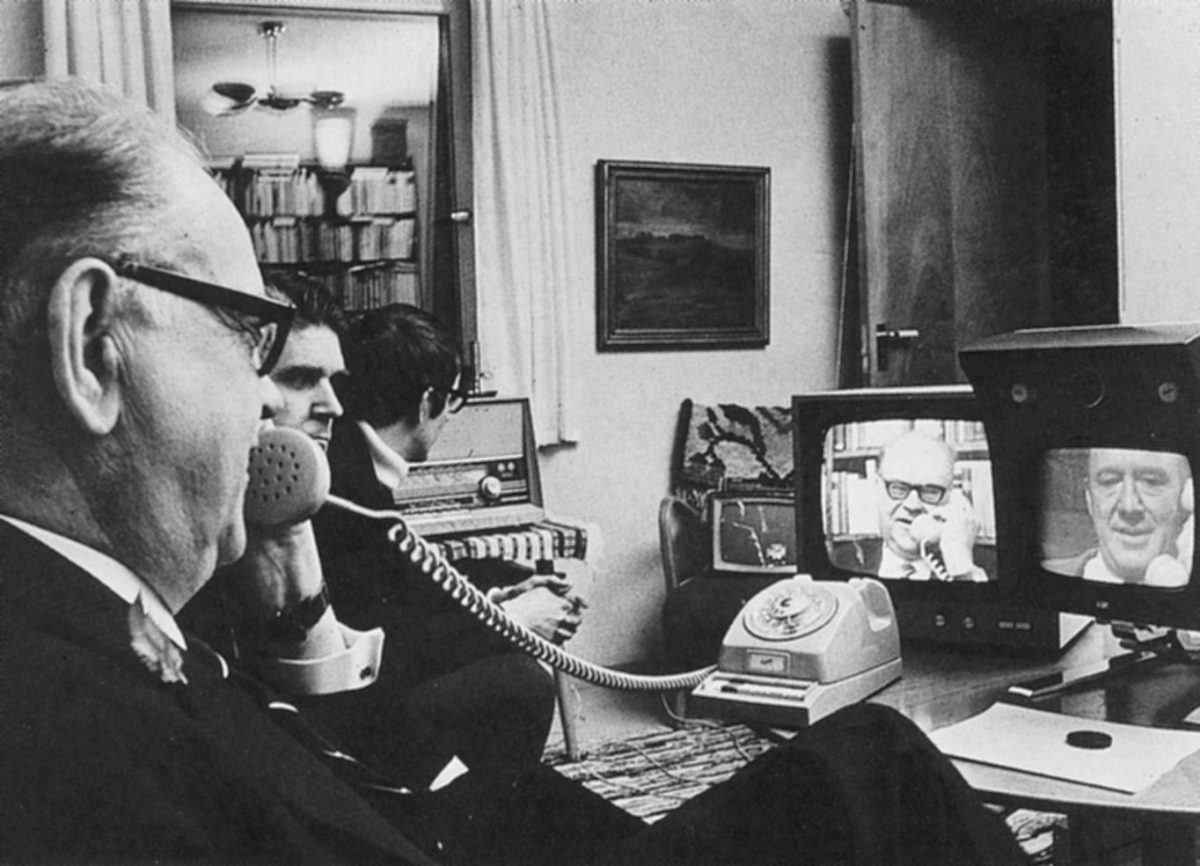
uses the videophone to talk to Lennart Hyland, a popular TV show host, 1969.
I also vividly recall the Telephone Pavilion, wherein “fair-goers were permitted to make videophone calls to volunteer recipients in other cities.” I was one of those so permitted and as I spoke with a fellow youngster across the Great Lakes in Chicago I thought, “This is going to be cool! Soon I’ll be able to talk face-to-face with anyone!”
In fact, it took 30 more years for cell phones to pop, but it did indeed come to pass. Yet there was another unique feature there that evoked the same expectation and anticipation: The monorails whispering past above our heads. There were three separate lines around the Exposition and for my part I could not wait to ride them to-and-from the various exhibits.
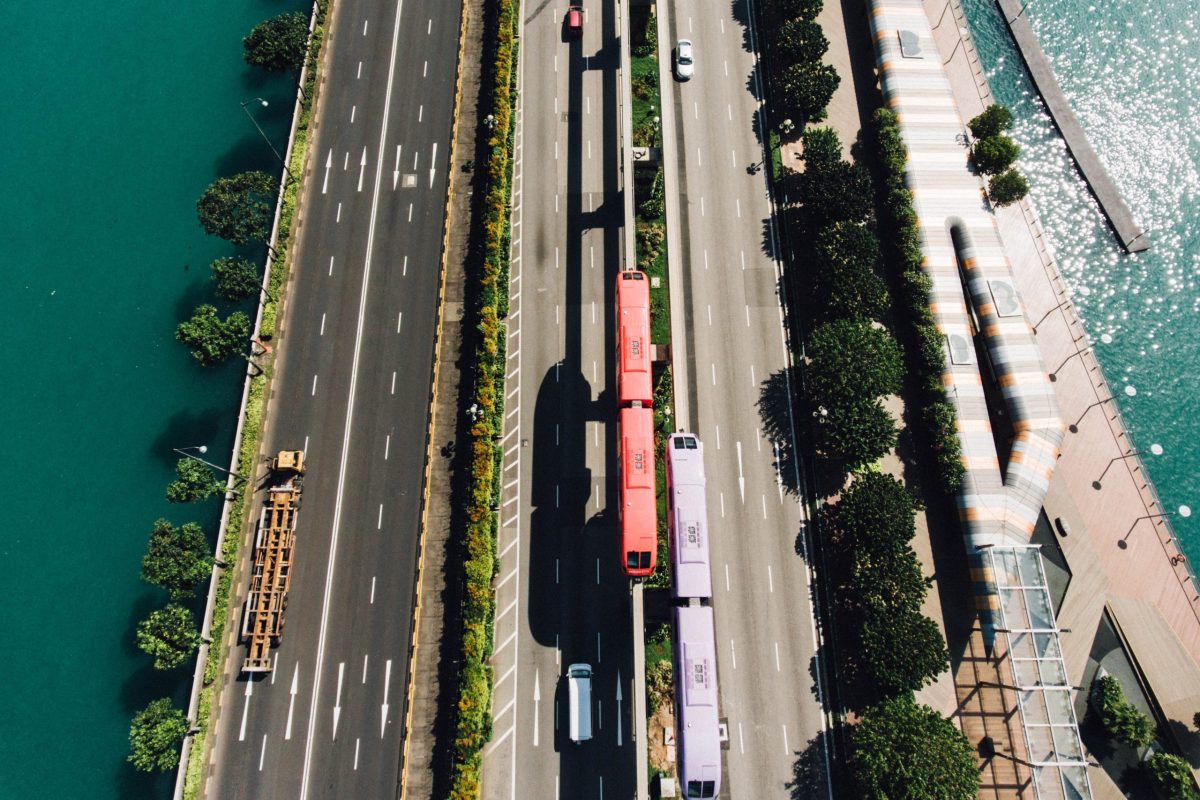
This, we were told, was the future of urban transport. Light, graceful, and smooth, with a short price and no need for tunnels, earthen berms, or heavy scaffolding. This would change everything. Walt Disney, for one, had exactly that vision.
After a trip to Germany where he viewed the Schwebebahn, the electric elevated railway topping a ravine in Wuppertal and “the oldest electric elevated railway with hanging cars in the world,” Disney brought the concept to his theme parks. An unusually prescient man, he believed he had found, “a critical step toward building the community of tomorrow.” Both of us were wrong.
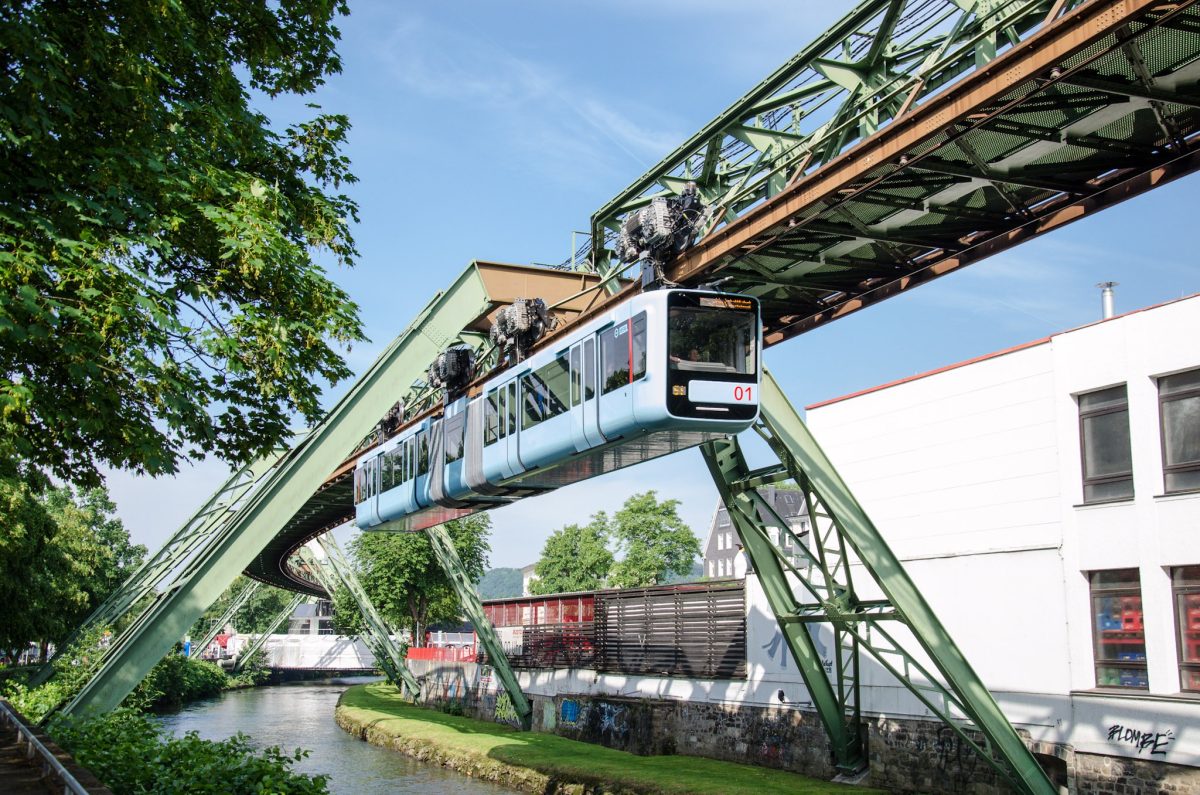
The revolutionary idea was that small, light trains could actually move above the populace without bisecting neighborhoods, shutting out the sun, or generating the characteristic shriek-and-roar of heavy rail.
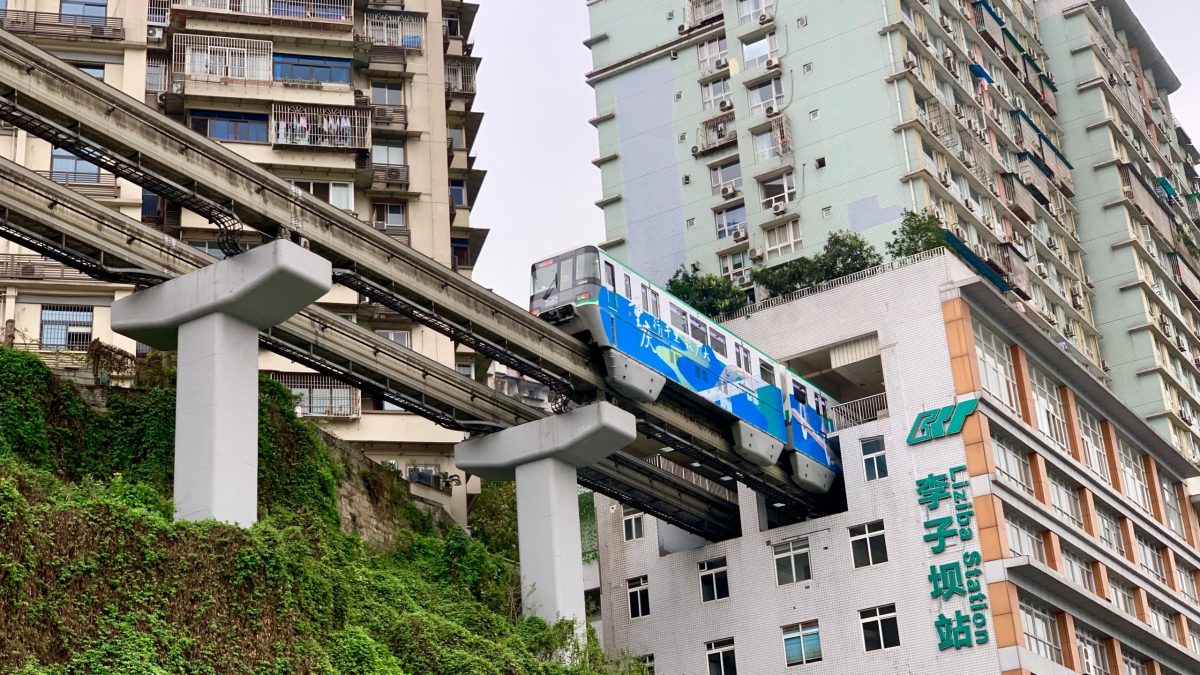
They could even move between — and into — buildings, dropping folks at their homes and offices rather than on or below the street. Watching trains packed with tourists actually enter the American pavilion was one of the highlights of the trip.
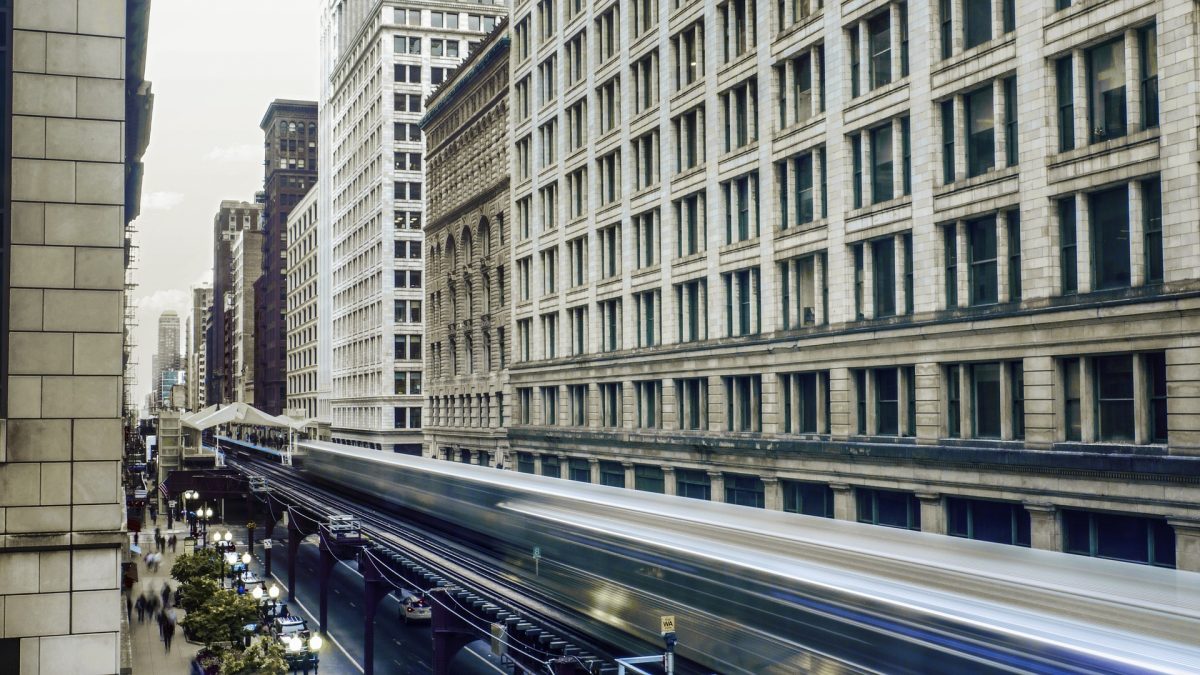
As I rode the Expo’s monorail, my family had just recently moved north from Chicago — with its famous ‘L’ trains cruising around ‘The Loop’ on massive overhead structures — to Toronto, a city with both raucous underground subways and charming electrified trams vying with automobiles at street level. My dad took me to the end-of-the-line and back our first week in town, and it was a great way to meet a new city.
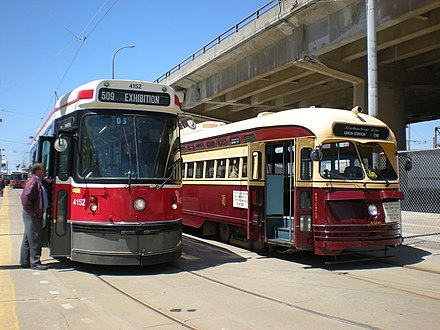
My dad and I rode all the way to the end of the line and back our first week in the city, still an awesome memory today.
Photo by Reverend Edward Brain, D.D.,1979 (CC3.0 en.wikipedia)
Five years later all aboard! again when we moved to New York City, a town always prepared to rumble both under and above the ground. Another fifteen years and I was on to my last U.S. destination, Boston, where the schizophrenic Green Lines can’t decide whether to tram along the streets, roar overhead, or rattle underground, and so do all three.