
By Dan Kempner, Managing Editor, Valutus Sustainability R.O.I.
Speeding along the pre-dawn Mass Pike en route to Logan Airport, my brother-in-law stretched languorously in the passenger seat, laughed and said, “how about those losers who spent all day at the Apple store for the new iPhone launch. Who would use a vacation day just for that?”

I knew the answer and so did he: I would.
I’d just devoted portions of three vacation days to getting one of the 75-million iPhones apple had prepared for this launch, so friends back home in Vietnam could have the newest, hottest tech before anyone else. And I’d missed the Climate Strike to do it.

I’d come to the U.S. a month before for a wedding and to see friends and family but, when word came down from on high – my wife in Ho Chi Minh City – that I had to drive an hour to a certain mall to buy a phone, computer and watch, I rumbled off to New Hampshire.
It was a hot day and, at a food-court counter that made blended smoothies, I ordered something fruity and handed them the travel cup I’d brought with me for the purpose. As usual, I felt a little smug that I’d remembered it.
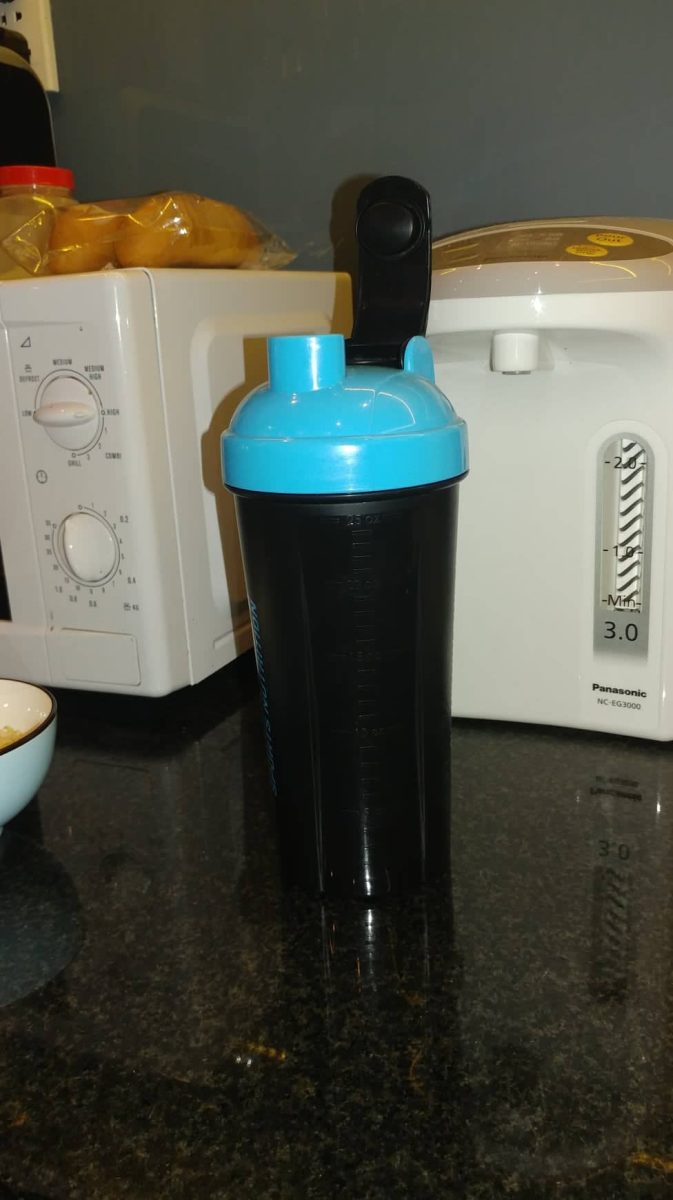
The youngster serving me was nonplussed and stuttered for a moment before turning to her supervisor and holding out my cup questioningly. “No,” the supe said, with a sympathetic tone, “company policy. We can’t use your cup.
“But,” I frothed inanely, “but…on the very day of the student climate strike?!” Okay, I’m not proud of it but, yes, I said that. Eager to soothe me the first clerk said helpfully, “I can’t use your cup, Sir, but I can use one of ours and pour it into yours…would that work?”

Needless to say, that did not work and, still thirsty, I headed through the mall to get my stuff. But something was clearly wrong as I approached the Apple store: there was a mob in the neighborhood. Was this part of the climate strike?
In fact, these weren’t kids milling around. Instead, in lines six-shops long on either side of the store entrance, were several hundred Gen-Xers and Boomers. They weren’t holding protest signs, but their own current, and perfectly viable, iPhones: texting, chatting, photographing, gaming, working, videoing, and posting, all while waiting breathlessly for their new iPhone 11, which, I learned, had just come out that day.
I, too, was one of those middle-aged posters, and after finding my place in line I posted this:

A pleasant lady in the group on the right said, “no, no, this line is only for people with an appointment between noon and twelve-thirty.” Appointment?
I checked and indeed, in order to pay well over a thousand dollars for one of their new products, an appointment to stand in line was needed. Yet making an appointment turned out to be superfluous anyway: the darned things were already sold out across the East Coast.
I finally got a slot to pick up an Apple Watch between two and two-thirty, which gave me plenty of time to ponder the greenomics of this absurd phenomenon.
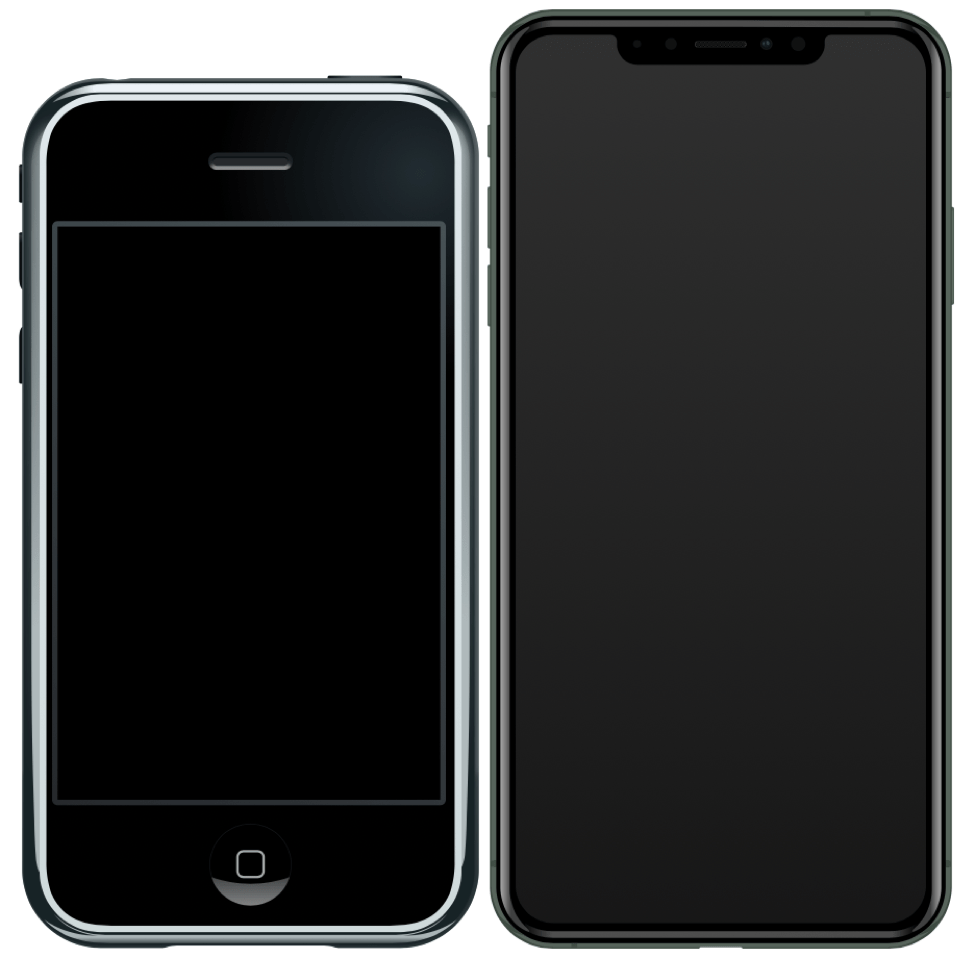
Photo source: Wikipedia [Note: Photos not to exact scale]
As GetOrchard.com reports, “On one hand, Apple arguably created the (annual upgrade) cycle by releasing a new iPhone every year. Major design changes are saved for every second year, making devices look obsolete, even if they still work perfectly.” In other words, their goal is to get us to upgrade annually. Then our phone plan providers — nicely aligned with the manufacturers — also try to hustle an upgrade every other year when our contracts are up.

Apple’s own environmental report documents many steps they have taken to lighten their overall corporate impact, but they also list an iPhone’s carbon phone-print as averaging about 79 kilos of CO2 over the device’s lifetime and about 80% of that — 63 kg CO2 — is in the manufacture. In other words, even if the buyer never uses it before replacing it with a new phone, that 63 kg of carbon dioxide – and a host of other greenhouse gases — is already baked in.

Photo source: Wikipedia
Let’s see, 79 kilos per phone, times 75 million initial units, carry the one and…hmm. By my count that comes to just under 6 Billion kilograms of CO2 in the first week of this launch alone. But wait! They’ve actually ordered around 180-million units for the sales year, which ups our calculations some to, uh, let’s see, 79 kilos times 180 million… I put it at 14.2 Billion kilograms or, more succinctly, 14.2 Million metric tonnes of carbon.
