
By Dan Kempner, Managing Editor, Valutus Sustainability R.O.I.
[Originally published Aug. 2019, VBlog]
Growing up, I loved my family’s edition of the Life Nature Science set, big hardcover volumes that were shilled by door-to-door salesmen. One was called The Birds I remember, another titled The Primates, then The Forests, Reptiles, and so on.
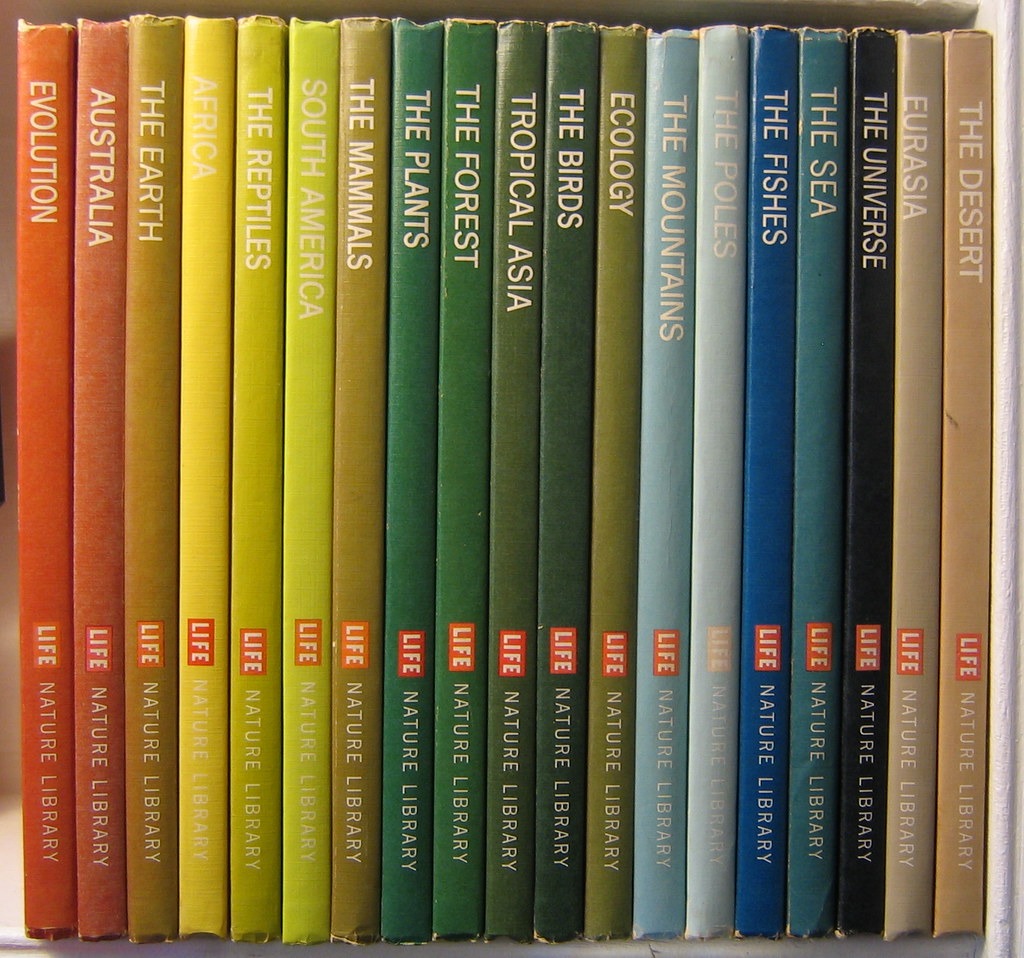
I cannot calculate all my hours after school in a brocade armchair soaking up facts about galaxies and tsunamis, baobabs and chimps, nor how eagerly I awaited each new volume.
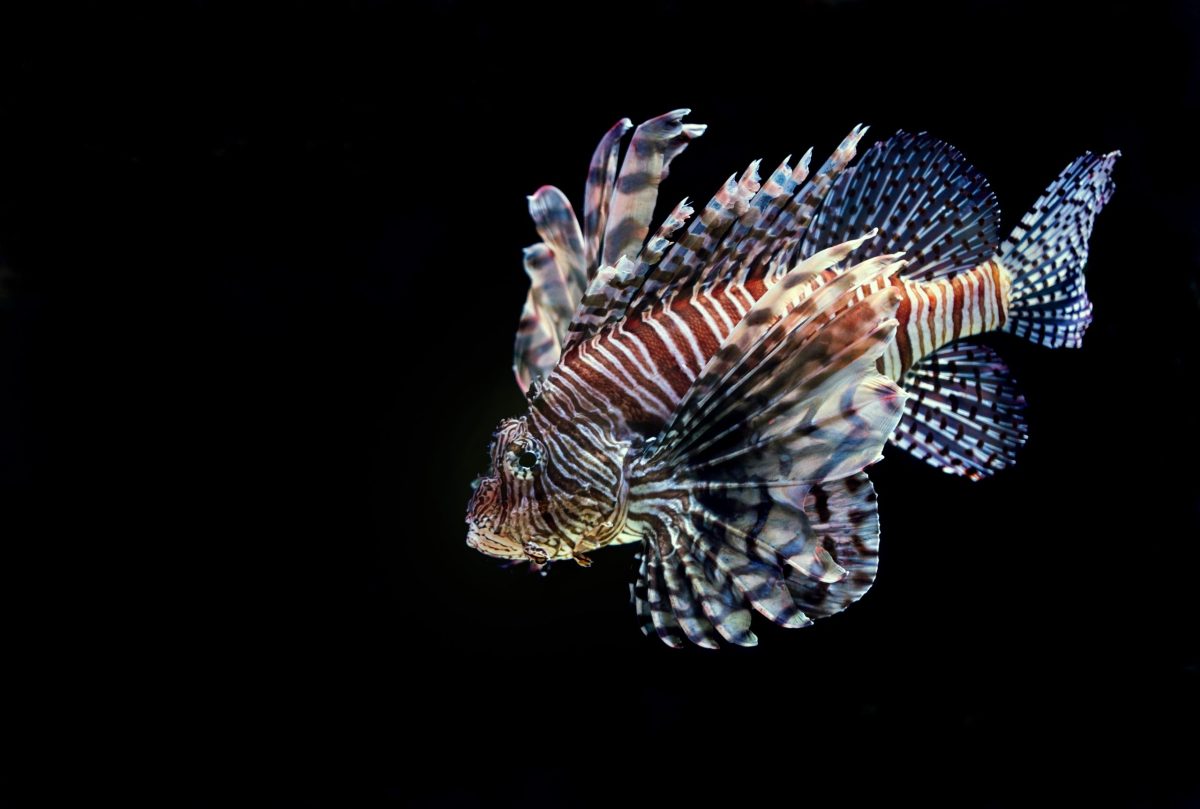
In The Sea I read of those deadly cousins, the stonefish of Australia and the Lionfish, with its poisoned spines. This was useful later when I encountered the latter in a lagoon off the Sinai coast. Thanks to Time-Life I knew to look, but not touch!
I also learned of the exotic-sounding Sargasso Sea — the only one defined by currents, rather than by land. The name alone was spellbinding and the Time-Life photographers did not disappoint. A marvelous place teeming with curiosities, rare specimens and history. The Bermuda Triangle’s home is here, after all, and Columbus traversed the Horse Latitudes, reporting vast matts of vegetation riding the currents.
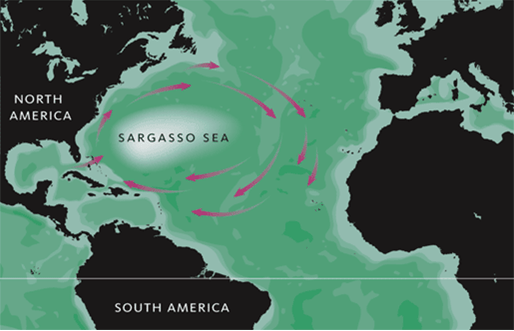
It is not enclosed by land at any point.
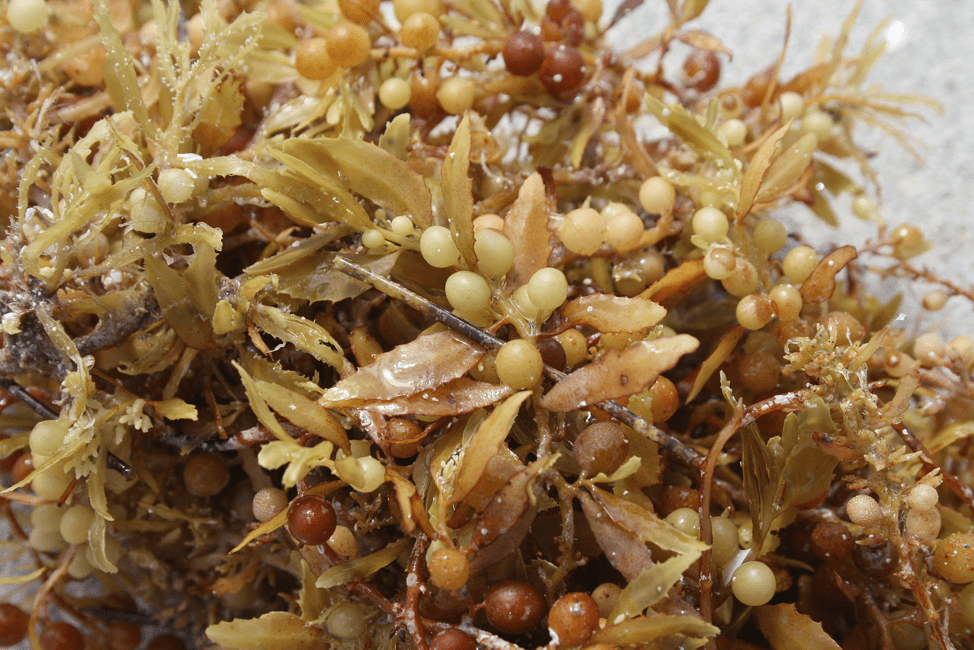
Known collectively as the North Atlantic Gyre, these currents host their namesake, sargassum seaweed, a tangled brown algal mass that floats atop the Sargasso’s relatively calm waters and houses an incredible array of marine life.
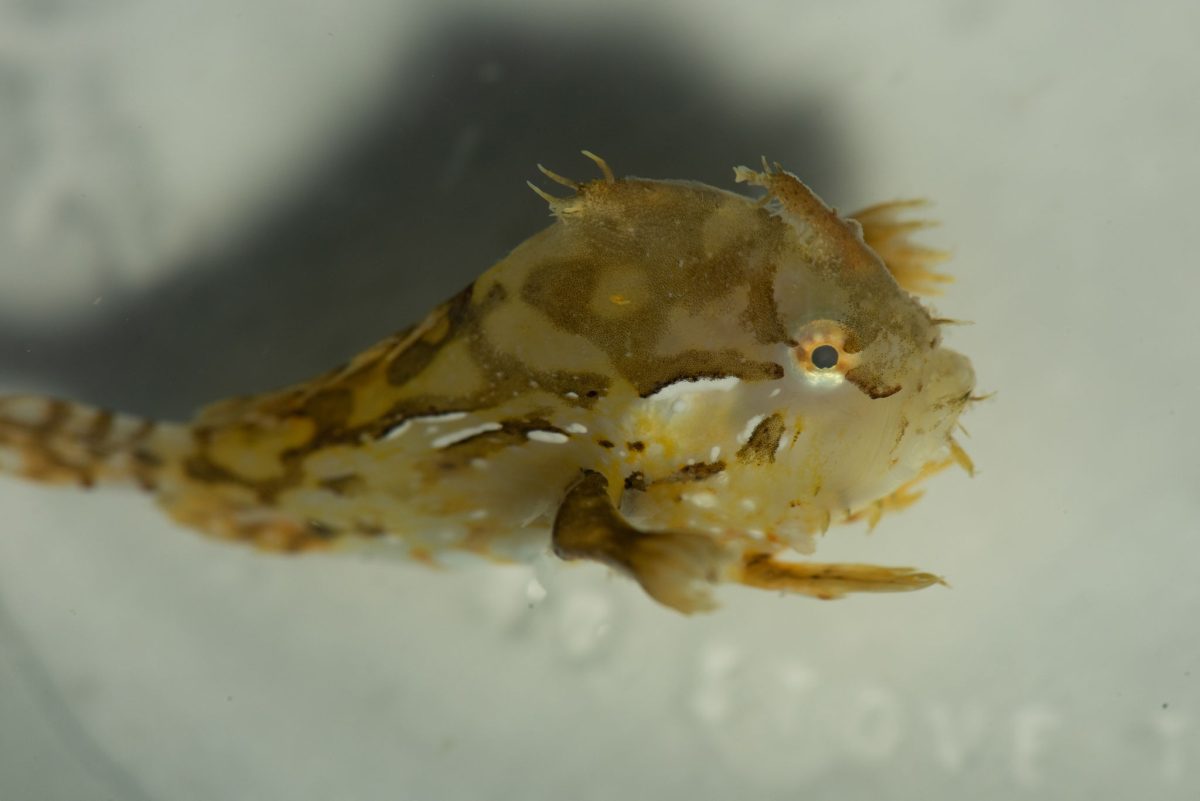
Artist and naturalist James Prosek wrote in National Geographic last month of cataloging, “900 tiny fish larvae, 30 amphipods, 50 snails, four anemones, two flatworms, six crabs, 20 shrimps, seven nudibranchs, more than a thousand calcifying worms, and abundant bryozoans, diminutive copepods, and other planktonic animals almost too numerous to count,” from a single, football-sized clump.
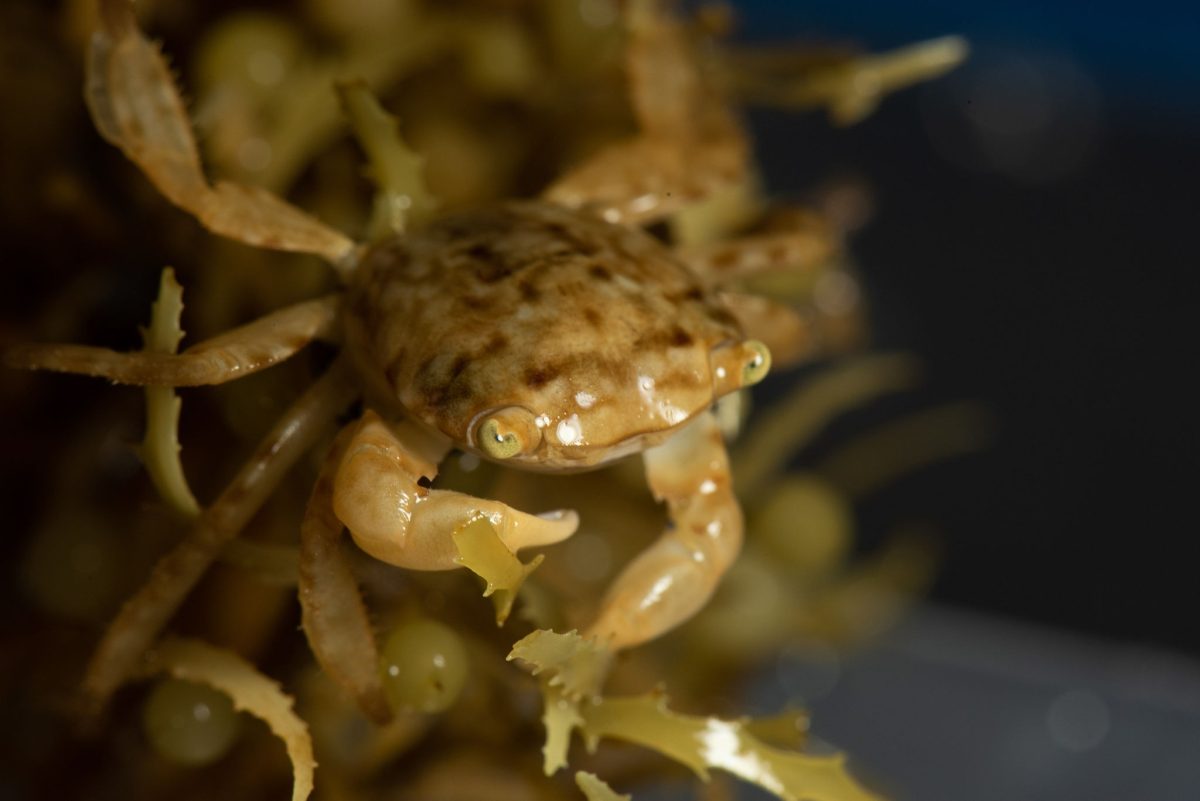
That is, as Prosek’s partner exclaimed, “3,000 creatures visible to the naked eye…” (Check out Prosek’s article, with stunning photos, here.) Yet something else now inhabits the floating, air-filled sargassum pods, something my books never mentioned, something new: plastic. Lots of it.
The gyre is essentially a whirlpool, sucking in anything not nailed down. In recent years this has created what has become known as the North Atlantic Garbage Patch.
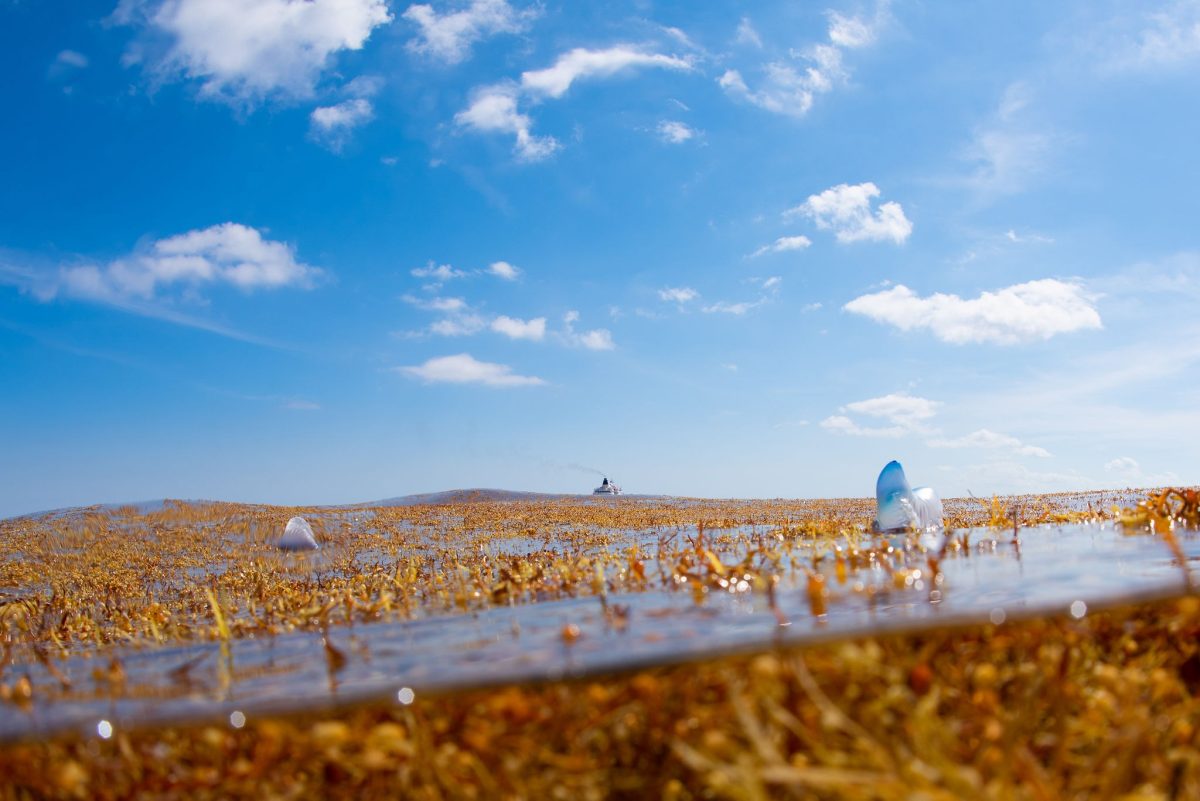
Readers of this blog, and of Sustainability R.O.I., already know that Daniel caucused with heavy hitters from industry, NGOs, and others in said ‘patch,’ during the Ocean Plastic Leadership Summit (OPLS) aboard the RCS Resolute off Bermuda last Spring.
Our report of that trip is here, and there’s more at our Plastic Standard site, but one interesting note was the sargassum which they floated on, snorkeled in, and from which they collected a great deal of trash.
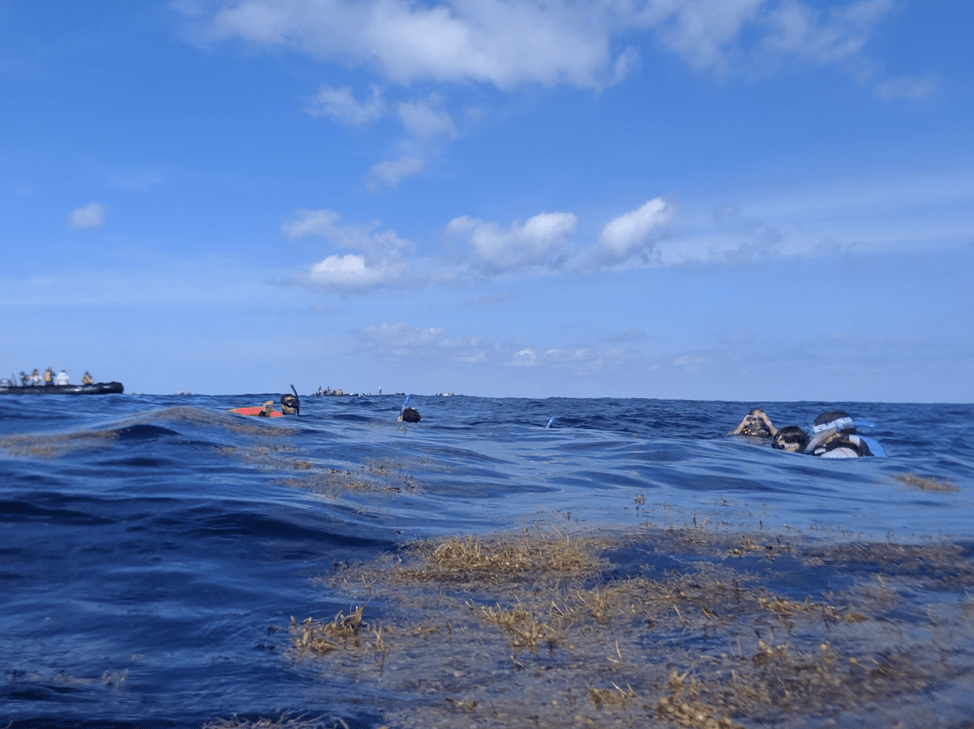
Normally sargassum is well-behaved but, in the Atlantic at least, it is acting out. Since 2011 the algae has been spreading until the Caribbean’s beaches are piled high with rotting, brackish, and noxious weeds.
This year the bloom has sprawled in an arc some 5,500 miles (8,850 km) long, spanning the Atlantic from the Gulf to Africa. The total mass is estimated at some 20 million tons.
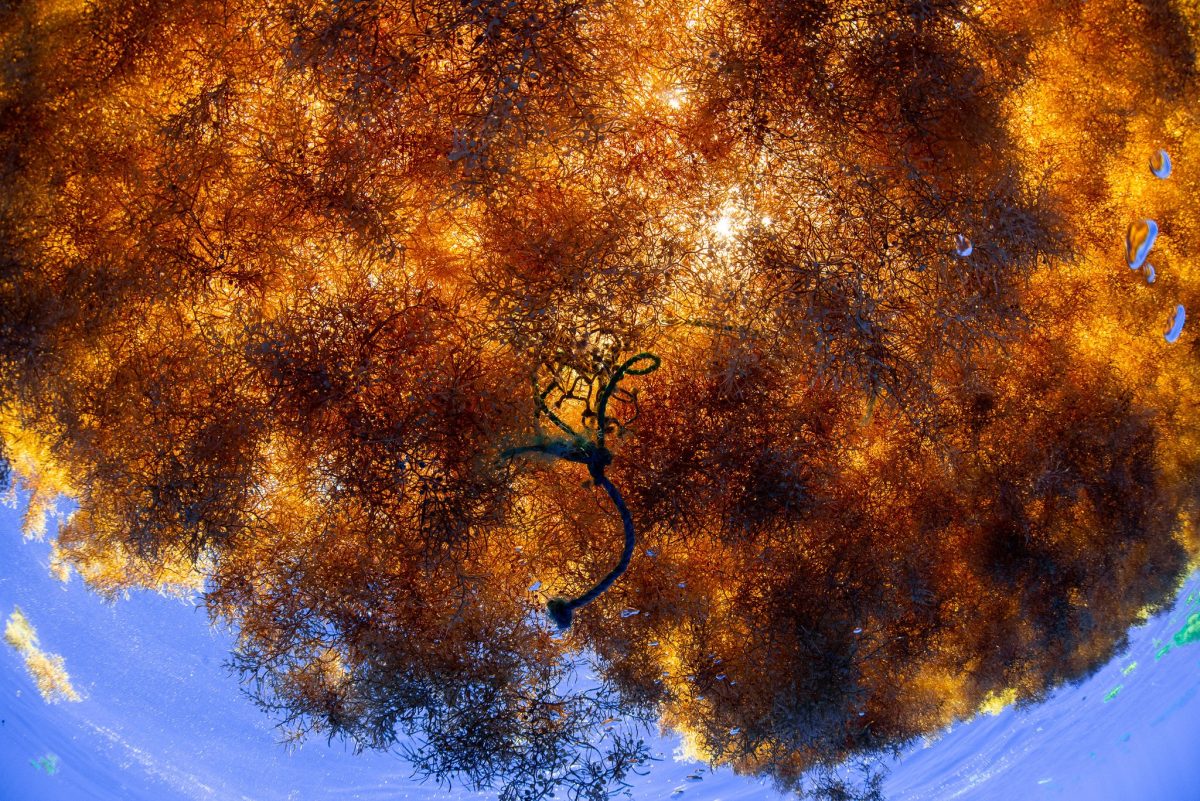
Next time I need stunning photos I must remember to take Tom Gruber, who took this shot, along with me.
Scientists have dubbed it The Great Atlantic Sargassum Belt, the largest algae bloom in the world. There was nothing like this in my old books! The idea of seaweed visible from space is totally nuts, I must admit, but on infra-red this stuff apparently shines like a hot bulb.
Resorts in the Caribbean are piled to a depth of eight or ten feet with sargassum, and it’s hurting business. (Here’s a link to an amazing photo of an algae-covered beach, and a great map of the bloom’s extent.) As to why? The science guys frame it this way:[1]
“…Recent increases and interannual variability after 2011 appear to be driven by upwelling off West Africa during boreal winter and by Amazon River discharge during spring and summer, indicating a possible regime shift and raising the possibility that recurrent blooms in the tropical Atlantic and Caribbean Sea may become the new norm.”
The gist seems to be that warming is leading to higher sea levels and higher ocean temps, exacerbated by minerals from fertilizer and deforestation changing the chemical balance of the ocean. Perfect conditions for Sargassum to thrive.
If these guys are right, the resorts in the southern Atlantic are in serious long-term trouble. Removal is costly, although the bloom has given birth to a new industry. Sargassum-removal companies are competing heavily to sweep all those beaches clean.
It’s unclear how problematic the sargassum will be at sea. It may be valuable as food and shelter for a host of species. Or, it may choke other plants and animals as it dies, sinks and cuts off sunlight to the depths.
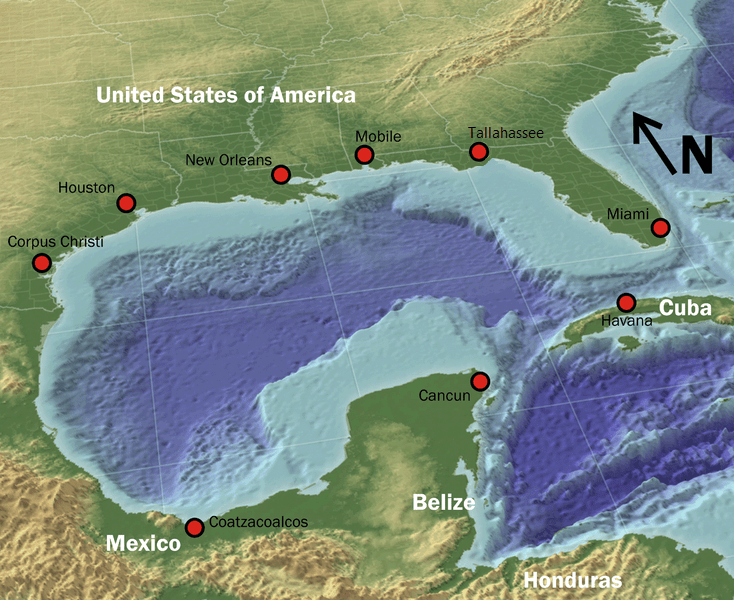
Those books I leafed through as a lad made no mention of preternatural algal blooms or floating islands of trash, so they may need some additional volumes to round out the series. Ocean Plastic? The Climate? Renewables, perhaps? In any case, we need to dust off and update those old tomes to include these recent turns of events.
Happily, there are ocean summits, and armies of brilliant, passionate people dedicated to restoring and protecting as much as possible of the extraordinary natural world as portrayed in those magnificent, if outdated, volumes. Even so I’d give a lot to be curled back up in that armchair with Eurasia or The Desert on my knees, when the only garbage patches were the ones I had to put on the curb before bedtime — or else.
Thanks for reading. Your comments are very welcome. You can comment here or email me at dkempner@valutus.
References:
[1] Excerpted from the abstract of The Great Atlantic Sargassum Belt, Science 05 Jul 2019:
Vol. 365, Issue 6448, pp. 83-87 DOI: 10.1126/science.aaw7912