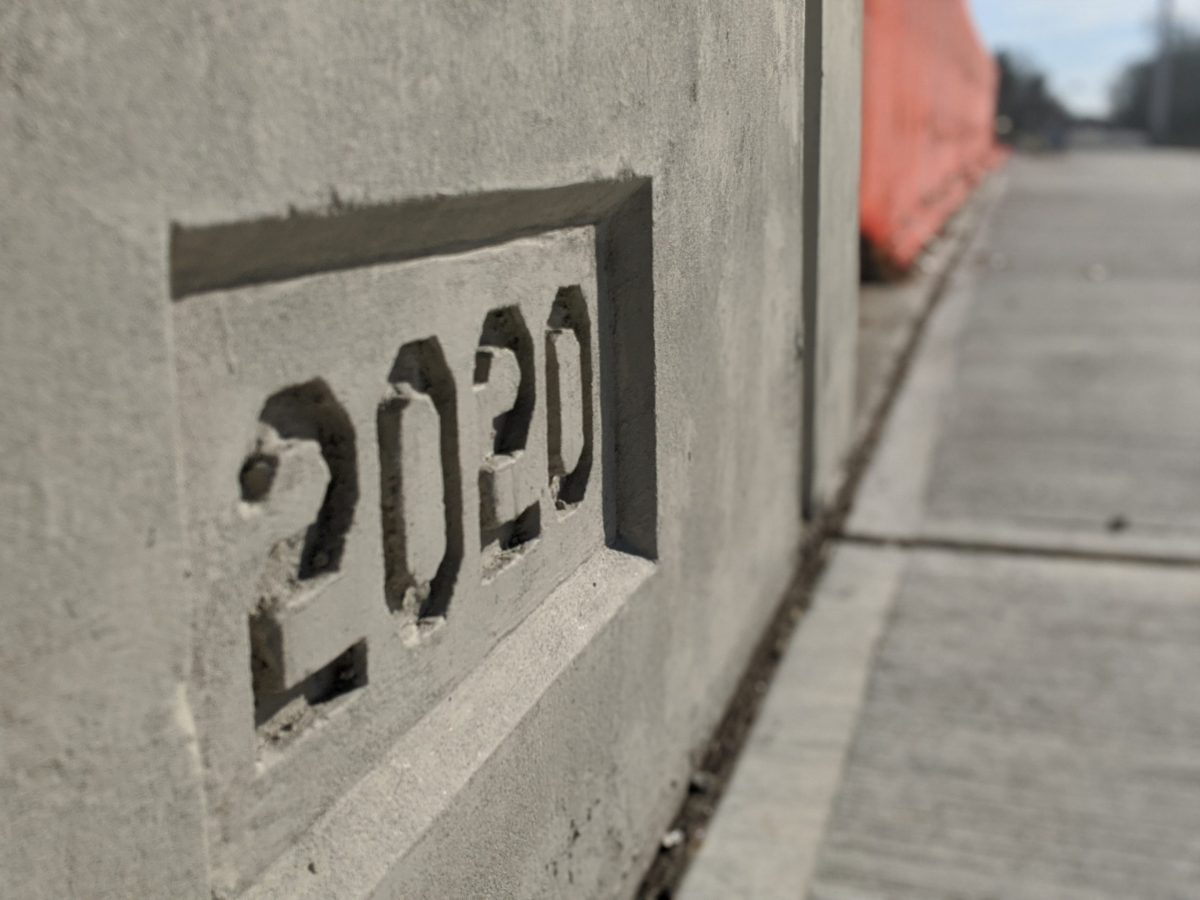
Every prior generation had some upcoming date, event or achievement that served as a metaphor for The Future. For many, that future was 2020. Now it has arrived. But If Now Was the Future Then, When is the Future Now?
When the Beatles’ John Lennon first heard Paul McCartney’s It’s Getting Better all the Time , he had only one suggestion, adding, “can’t get no worse,” to the chorus. The former sentiment is, in fact, true. The latter is not: It can get worse.
It is possible to continue the good trends while changing the bad ones and It is our task now to stop the slide and make the world much better.
Welcome to Valutus Sustainability R.O.I. Special ReCap/PreCap Edition.
In it we Recap 2019, and Precap the new year — and boy, is it ever shaping up to be a humdinger! What will we be talking about this time next year? We've consulted our crystalline spheres, stopped in at Delphi, and even looked up a little hard data — hey, it's us. Read on for our 2020 prognostications.
Happily, many of us just had a short break, a breather, a catnap away from the fretting and the struggling and the urgency and foreboding that comes with working on sustainability.
As you rise and turn to your overcoats and galoshes once more, take stock of your own impact, of what your contributions mean to us all.
How? We suggest the George Bailey method: what would the world have been like if you had never been born?
There's gold in them thar' hills, but the process of getting it out of the hills is a costly one for the environment. Headlines such as, “The Environmental Disaster That is the Gold Industry,” are not encouraging to the argument that mining gold is worth it.
We can — and we must — change the odds that the climate will tip in our favor. We do this both by changing the speed at which new, more sustainable ideas spread, and by changing the rate at which those ideas turn into actions.
A tipping point is, “the moment of critical mass, the threshold, the boiling point,” after which something — an idea, a product, a belief — takes off, grows exponentially. It is, as Malcolm Gladwell put it, the point where it “spreads like wildfire.” In the case of our climate however, we’re not concerned with one single tipping point, but two.
By Daniel Aronson.
While there are myriad perspectives on sustainability and corporate responsibility, each with its own unique value, I often find myself focusing on sustainability’s operational aspects: what can we do to increase the pace at which belief in sustainability translates into concrete actions that benefit the environment, society, and business? To me, a key question is how we get more done, how we "hard wire" sustainability into the way businesses operates.
There was a hole in the system. We needed a standard. A universal standard makes it easier to focus on real impact; to allow everyone to get on with manufacturing their next generations of goods and services. To allow the whole industry to move forward.